Projects / Machined iPhone
An iPhone from a block of aluminum
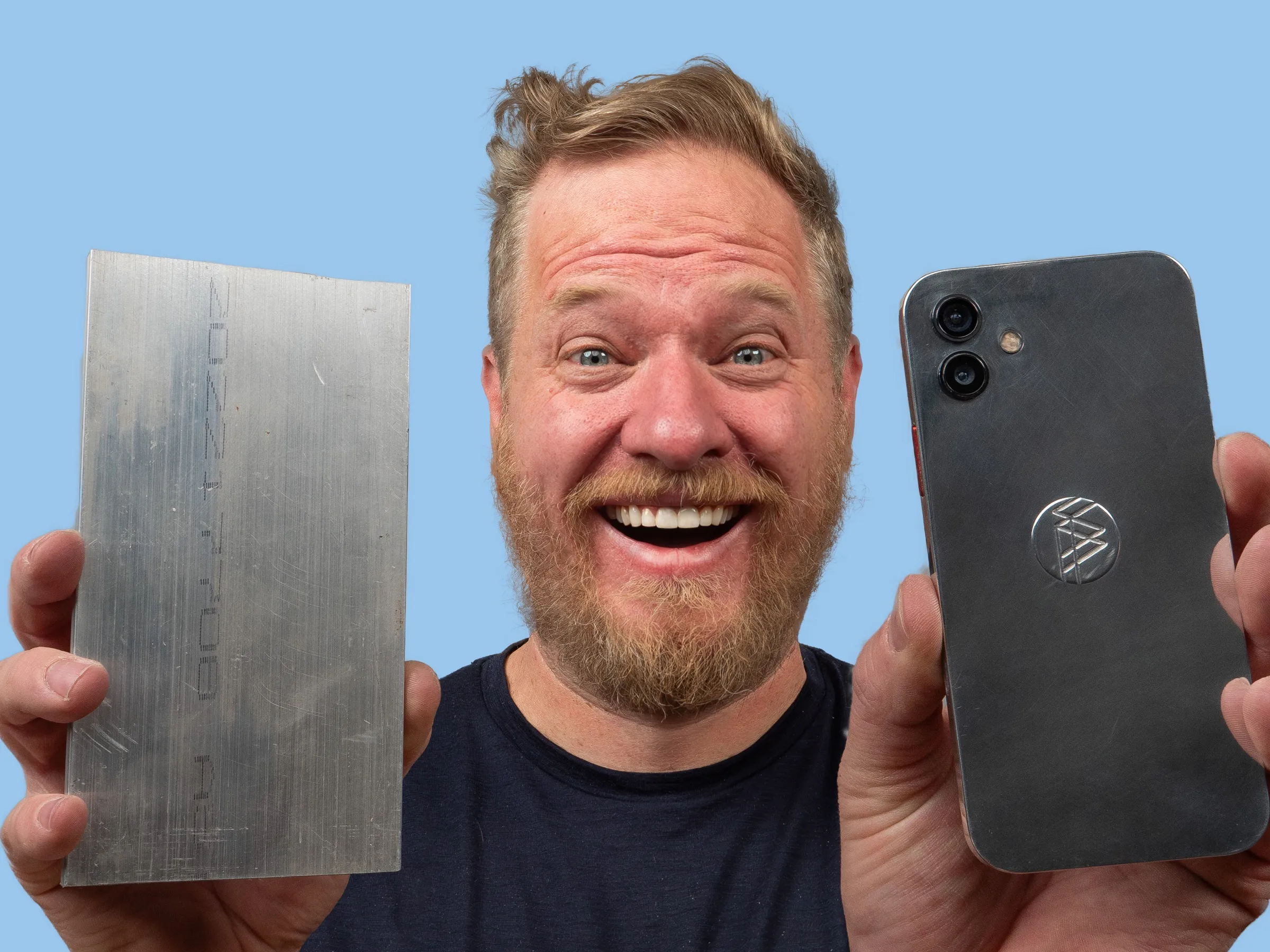
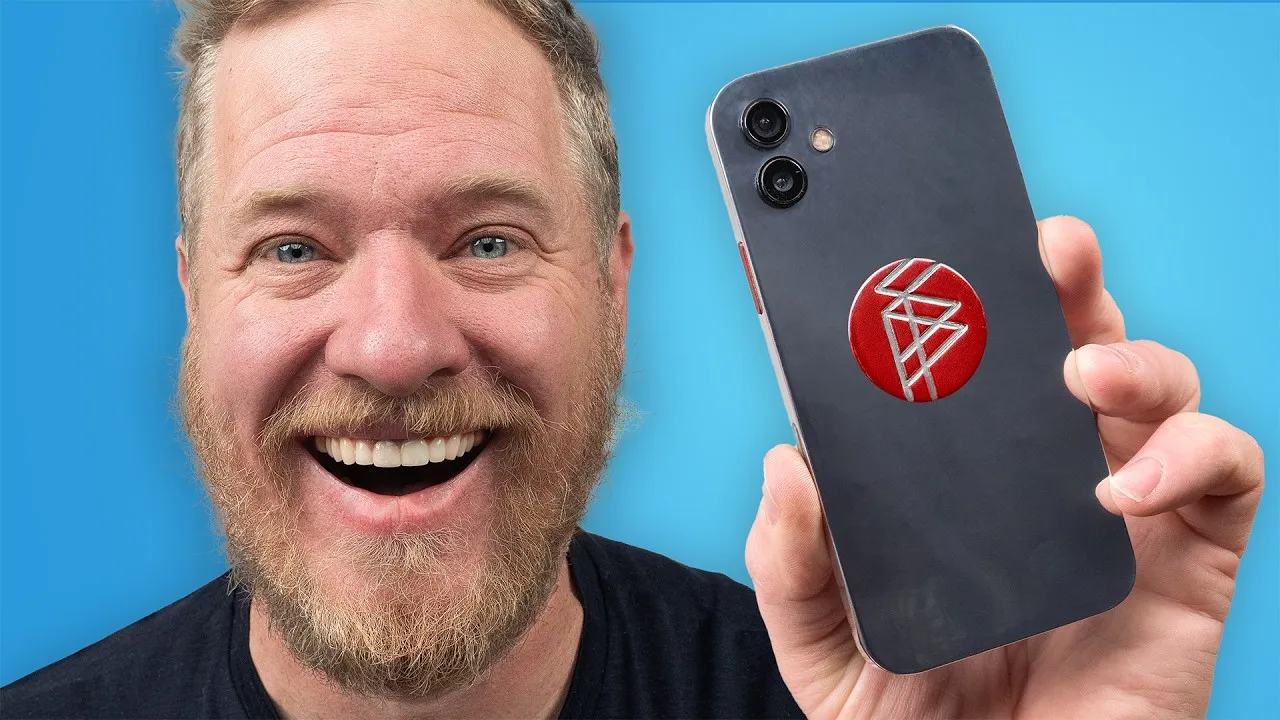
I machined my own working iPhone out of solid aluminum on a desktop CNC mill. It took over a year. Then I redesigned it so that anyone can 3D print one.
- phone
- iPhone 12, with the parts moved over from a used one
- machining
- about 20 hours per phone, 21 cutting tools
- printed version
- carbon fiber nylon, on a consumer 3D printer
- published
- December 2024
Why make your own
Ever since I built an iPhone from parts I bought in the markets in China, I have wondered what it would take to redesign one completely.
The hardest part of putting a headphone jack back into an iPhone 7 was fitting everything inside the housing Apple made. If I could make my own housing, I could make room wherever I needed it.
We can build our own PCs, pick every part and make them look however we want. I think we should be able to do the same with our phones.
How it went
Apple publishes drawings of the outside of the phone for people who make cases. There are no drawings of the inside. Photos distorted it, and a flatbed scanner only saw whatever touched the glass.
What worked was putting a real Apple shell in the mill, cutting it down a layer at a time, and scanning every layer.
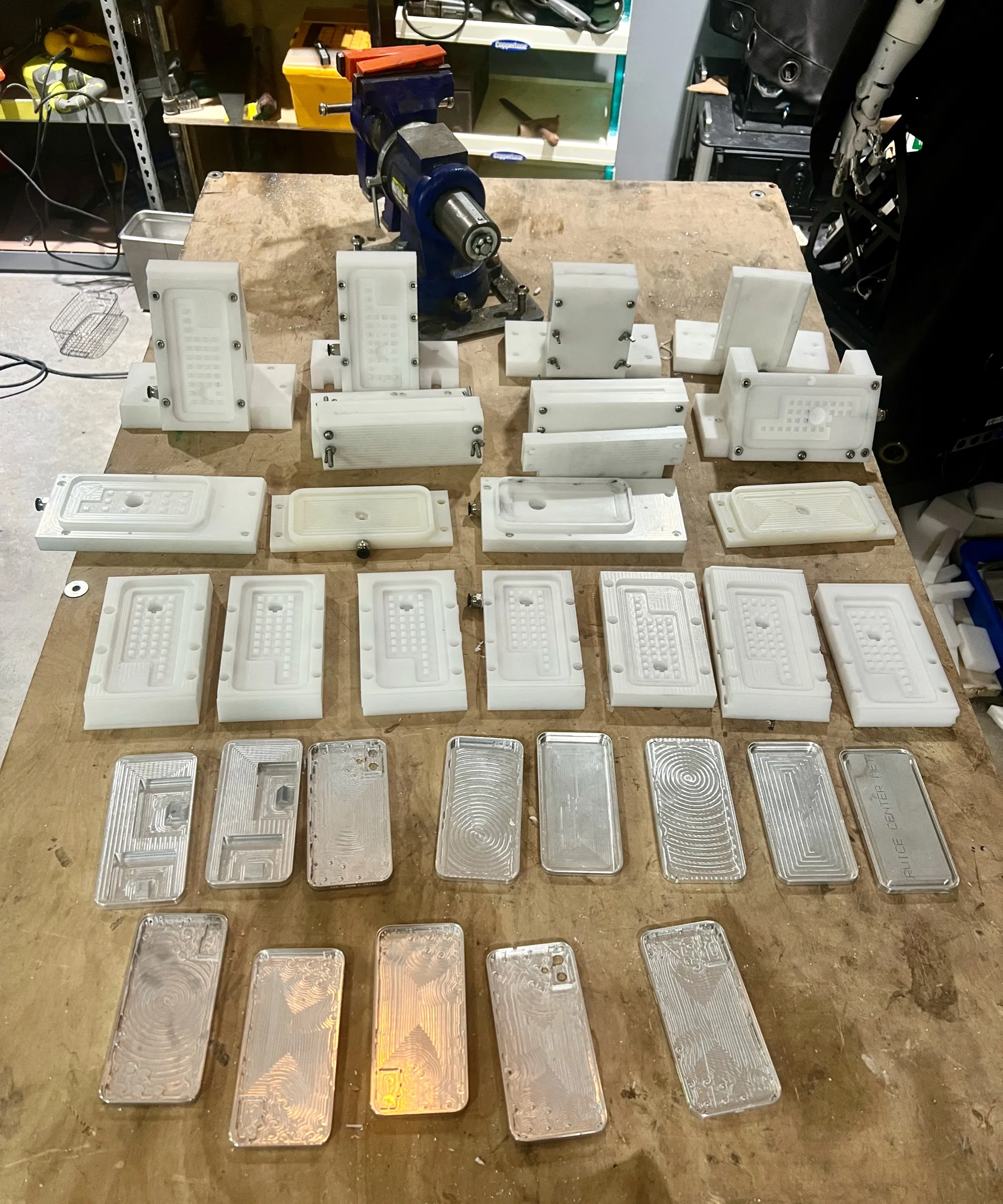
I am not a machinist, and the mill is a small desktop machine better suited to wood and circuit boards. I broke a lot of cutting bits, some of them $360 each, and drilled holes in the wrong place. By the end I had a pile of more than a dozen aluminum prototypes and about 20 fixtures I had made to hold them.
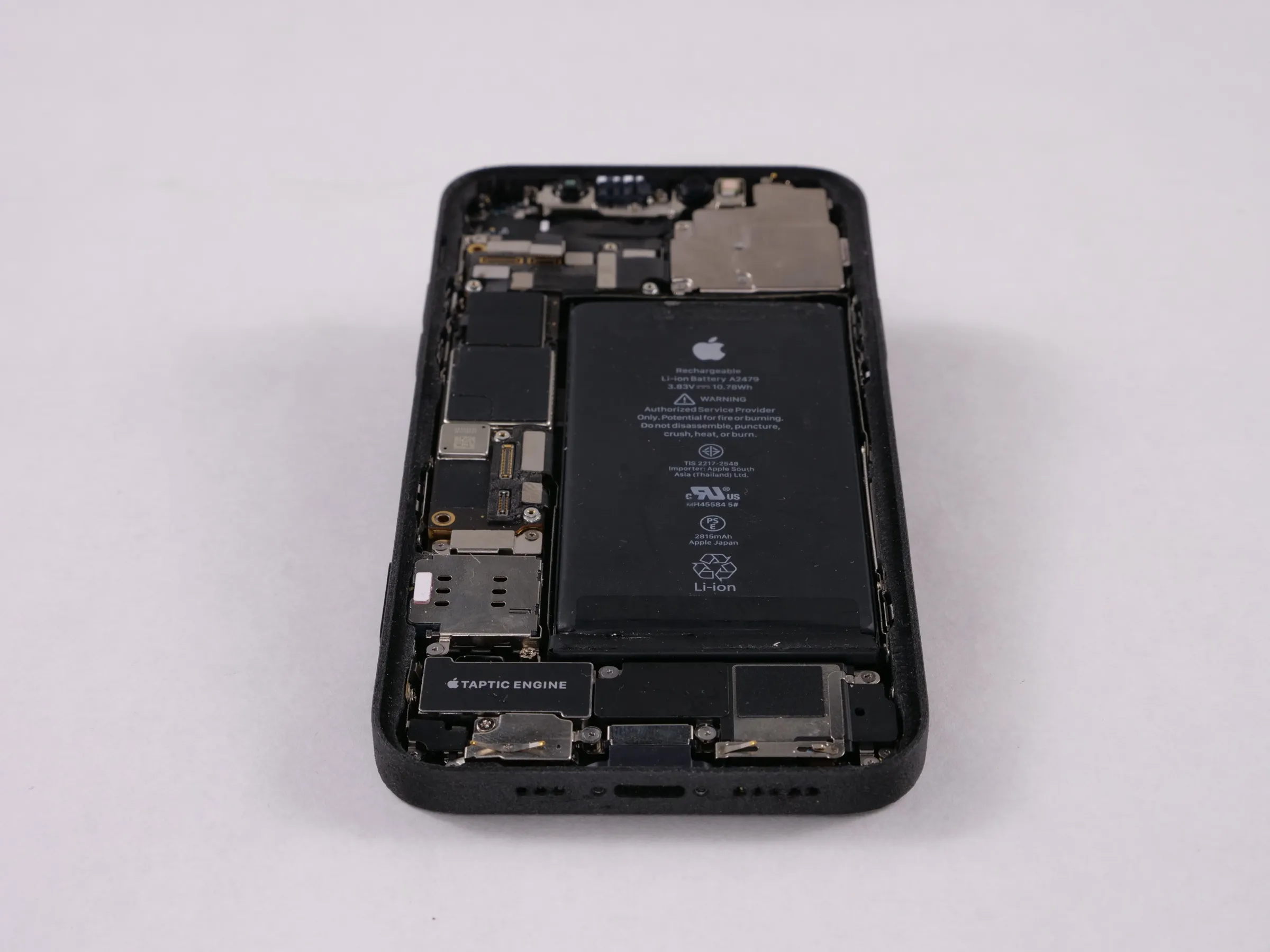
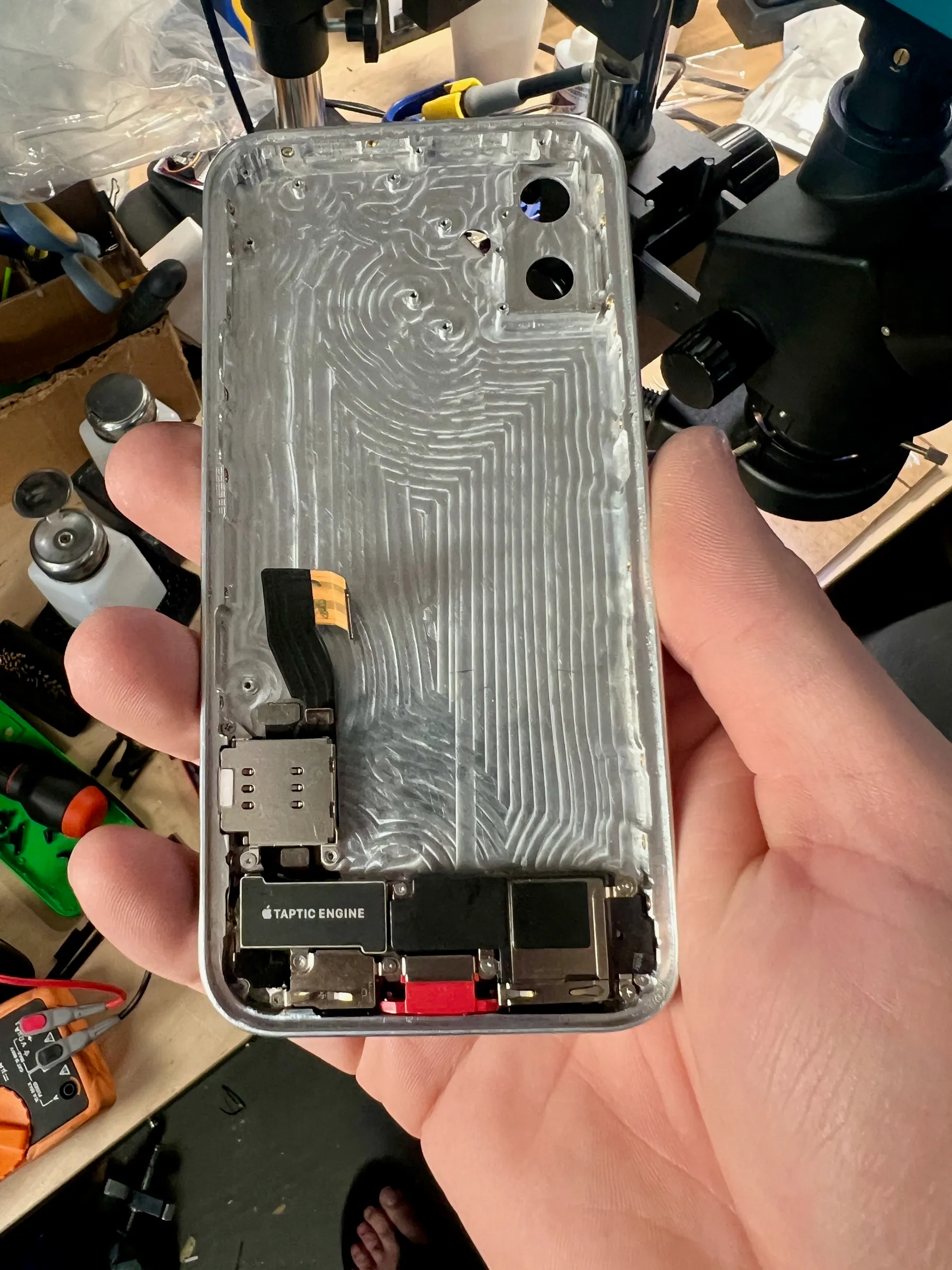
Eleven months in, at 1:41 in the morning, it turned on.
Then I 3D printed one
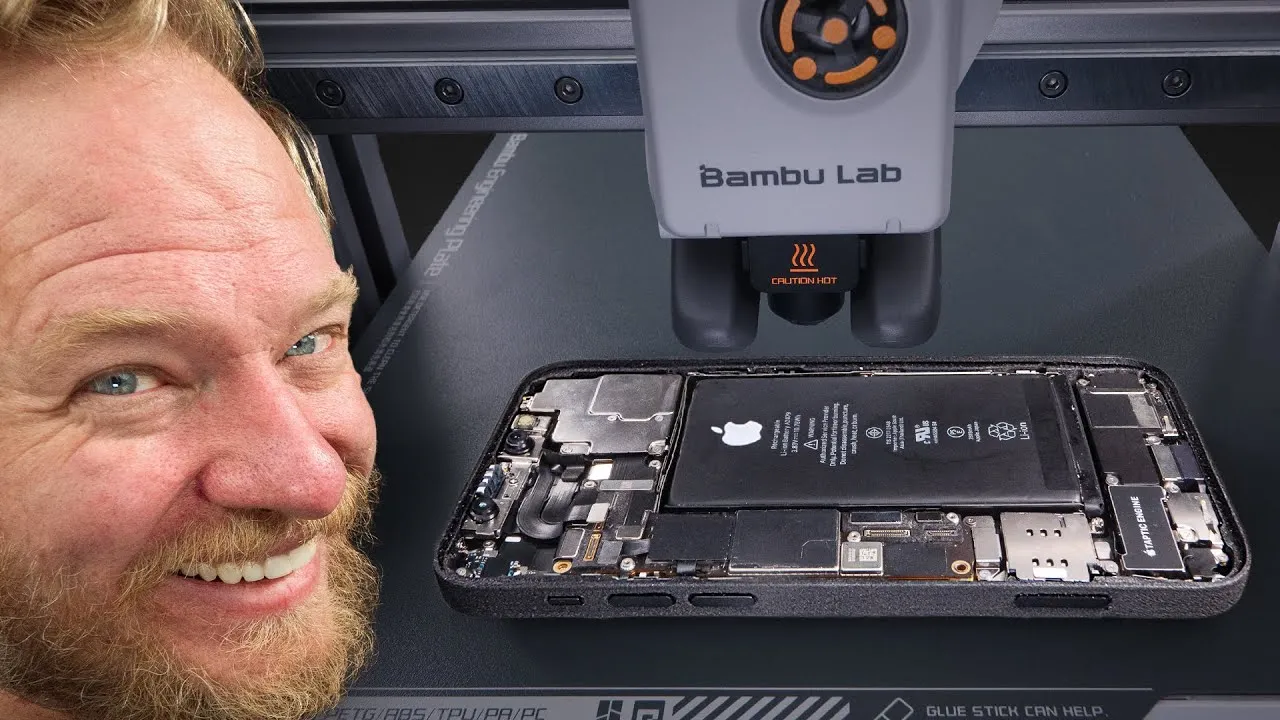
Not everybody has a CNC mill. So I took the same design and reworked it for an ordinary consumer 3D printer, and built a working iPhone 12 in a shell printed from carbon fiber nylon.
The screws in a phone are too small to cut threads for in plastic, so they go into tiny threaded inserts, pressed in with a soldering iron.
It works, and it feels great in the hand.
The right to modify
I think the right to modify our devices is a natural extension of the right to repair. Owning a phone should mean more than being able to hold it in your hand. You should be able to repair it, modify it and make it your own, the way we do with cars and PCs.
You still cannot make an iPhone from scratch. Every one of these starts with a genuine logic board out of a genuine iPhone. At best I am giving new life to parts from used and broken phones.
What people wrote
How (and Why) a Reverse Engineer 3D-Printed an iPhone404 Media, 2025
Man spends year creating aluminum iPhone housing from solid metal blockBoing Boing, 2024
An IPhone Case StudyHackaday, 2024

Want this story on stage or in print?
I give talks about projects like this one, and I am happy to talk to press.